Tuesday, November 18, 2008

Symbiosis


Symbiosis is a close relationship between two organisms. There are three types of symbiosis: mutualism, commensalism and parasitism. Mutualism is a relationship where both organisms benefit. Commensalism is a reltionship where one organism benefits and the other is not harmed. Parasitism is a relationship where one organism benefits and the other is harmed. Mutalism may occur between a dog and human. Both of them help each other; where the human gives love and support to the human, the human gives the dog shelter and care. Both are benefiting from the realtionship, therefore it is a mutual relationship. An example of commensalism would be moss and a tree. The moss has a home and food, as for the tree is just helping out without anything in return. Hence, moss benefits and the tree is unharmed. A worm inside a bird is an example of prasitism. The worm will reproduce and get food from nliving inside the bird as the bird is infected and will soon die. In this case, the worm benefits and the bird is harmed. This is what we learned in science about symbiosis.

Food Web!!

Monday, October 27, 2008

Seven Puget Sound Killer Whales are Missing!!!

In nearly a decade, reasearchers are seeing the greatest decline of ocars whales in history, as seven Puget Sound Killer whales are missing, now assumed dead. This is a major problem says, Ken Balcomb, a senior scientist at the Center for Whale Research on San Juan Island,"This is a disaster. The population drop is worse than the stock market." As of now only 83 of the whales remain in the world. Balcomb then states that this did occur back in 1991 when researchers also tracked the death or disappearence of seven whales. After looking over cerent circumstances, Balcomb says that the decreases of chinook salmon, key food for these whales may be a reason for these unsual deaths. The population reached 140 in the last century, and were listed endangered in 2005. We may be in the beginning of another decline in the population," said Howard Garrett, director of the Orca Network, a nonprofit education and advocacy group. "The whales recently have been traveling over greater distances than usual, suggesting they may be ranging farther for food," said Brad Hanson, a wildlife biologist with the National Marine Fisheries Service. "Lack of food may be a concern, but it's too early to know the reason for the unusual number of presumed deaths," he said. The loss of prey is know as to be the biggest threat to these whales. Whale-watching tour boats and underwater sonar tests by the Navy also have been concerns. In the late 1960s and early '70s, the population fell as dozens were captured for marine parks. "The whales were making an apparentg comeback in recent years, reaching 90 in number in 2005, "but it's been a downhill trend now for three years," Balcomb said. Of the seven missing whales, there were to female who had just had claves. Of the claves one is missing and one is not. "It is not unusual to lose older or younger whales, but losing two females in reproductive prime is "a bit of a concern, since they typically have a high survival rate," Hanson said. "One female whale, known to scientists as L-67, had the potential for two or three more calves," Hanson said. A juvenile killer whale from Washington waters, a mother named Luna, she made the paper in 2001. Seperated form his pod he later was found in Nootka Sound, off the west coast of Canada's Vancouver Island, Luna was later reported dead after being hit by the propeller of a large tugboat. L-67 showed signs of depresion, as not eating, before disappearing. Some other whales like, K-7, the 98-year-old matriarch of K-pod, and L-101, a 6-year-old male who is a brother of "Luna." A clave J-43 was born in November but reporters say that she most likely didn't survive the winter. "The whale census may increase if baby orcas are born this fall. And there's a slim chance the whales may reappear elsewhere, as "Luna" did," Hanson said. But Balcomb said,"We've been monitoring. They're just gone."

Thursday, October 16, 2008

Global Warming makes Serious Effects of Wildlife Animals!!


From lions to monkeys, all wildlife animals are being effected in some way by Global Warming! As if these animals weren't already in so much danger, they have something more to worry about. Steven Sanderson, president of New York-based Conservation Society, has to say "Climate change conjures up images of rising sea levels and stranded polar bears. But perhaps the greatest threat will come from emerging infectious diseases as a result of changing temperatures and rainfall levels." at the World Conservation Congress in Barcelona. Causing painful internal hemorrhaging and high fevers, the Ebola and Marburg viruses seem to be the new infection for chimpanzees, gorillas and even humans, after researchers link an unusual pattern between rainfall and dry seasons. But that's not all the trouble, Harmful Algae Blooms also know as "red tides" are. caused by higher sea surface temperatures. These "red tides" conducive cankers that have killed hundreds of fish, make sea mammals struggle, and has increased the deaths among penguins and sea birds.
"We are seeing novel, emerging threats in the form of disease coming out of nowhere and having devastating impacts on animal populations," said Michael Hoffman, a scientist at the International Union for the Conservation of Nature (IUCN) and co-author of a comprehensive study of the survival status of mammals. A survey shows that one out of four animals are endangered and more than half are declining. Mr. Hoffman than tells AFP, "Disease has always had a role to play in affecting populations, but now we are seeing diseases that are highly pathogenic."
A fungus called Chytridiomycosis has wildlife researchers confused as anphibians are suffering the most species loss because of Global Warming. Due to climate change and illegal international trade the diseases if spreading globally, species of the frog, toad and salamander have already been wiped out. Scientist are trying their best to find a cure as many species are still disappearing.
Some researchers have this say about this."Listed as "endangered" on the IUCN's "Red List" an inventory of the survival status of more than 44,000 animals and plants -- its prospects as a species "are extremely bleak," said Simon Stuart, in charge of biodiversity assessment for the IUCN. "Monitoring the health status of wildlife can serve as an early warning system for humans, "said William Karesh, director of global health programs at the Conservation Society."Any disturbance in the environment shows up in wildlife because they don't adapt very quickly or easily," he said.

Thursday, May 29, 2008

Artic Tale!!!!!!!

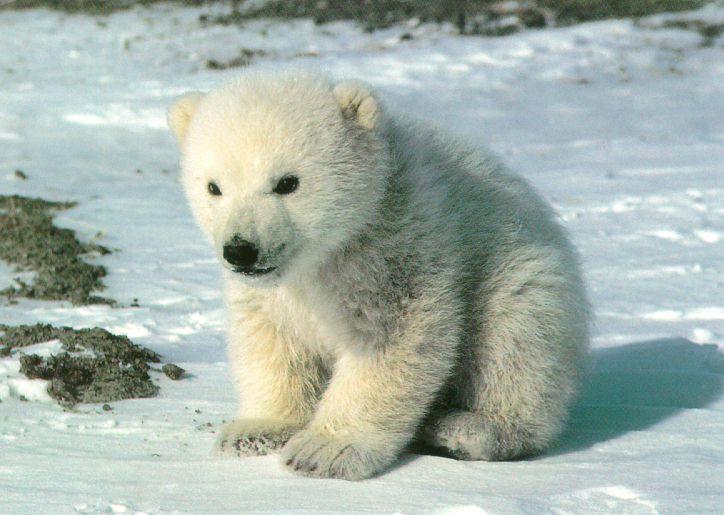
Today in class we watched a movie about the struggle of life of polar animals because of GLOBAL WARMING!!!!! In the movie they showed a polar bear family, of a mother and two kids. The babies are so cute when they tumble down the snow an dare playing around. During the course of the babies growth, they struggle to find food for THREE whole months. Can you even imagine not having any food for a whole day? Then the day had come, the sad tragedy of the movie, one of the baby polar bears died! How SAD! The struggle continues and neither the mom or baby has had any food, it is time for the mom to let her baby find its own way. How can she let her baby go in these circumstances?! Along with the polar bears the movie show a family of walruses. The walruses have an even a harder time because they can't say in the water too long and neither the land. This is a problem because the ice was not thick enough for the walruses to climb aboard on. After a few days, the walruses to find new land, well ice. That same day the baby polar bear decides he needs to find food and moves to a look out, off to new land. After three days of non- stop swimming, the polar bear finds another polar bear. After a compromise the other polar bear shares its food. Afterward, the baby leaves. On the other hand, the walruses had been swimming for a couple of days too, and land upon stiff land that they can rest on. A few months pass and the ice at their own home starts to form, so there will be enough ice for the polar bear and walruses to live on. How cute! They live happily ever after!

Tuesday, May 27, 2008

SPLASH!!!!!! Are your getting spalshed with water or dirt??????

SPLASH!!!!! In a class experiment today in school we learned about the water cycle. In this experiment we each had a part in the cycle. Most people were a spoon, which represented evaporation and condensation, their job was to take water from one reservoir to another. On the other hand, others were walking around with cups as clouds. The clouds would walk around the room and if a spoon intersected with a cloud before it meets its destination then the spoon would have to pour the water in it into the cloud, or cup. When the cups were filled to the top they would return to the ocean and rain down and then start over again. For the reservoirs we used tanks filled with water, some like the ocean, aquifer, streams and lakes. After we imitated the water cycle we saw that the reservoirs did not differ very much since the begin of the experiment. The scientist explained that this was a balanced cycle, but was this true, No! We now moved on to part two of the experiment, the truth. In this part of the experiment, we now added to other main people to see the human influence on the water cycle. To see the human influence we added a couple people with bigger cups representing our taking of the water and added two of the reservoirs with blue food coloring and one empty in which the people with the bigger cups would then fill. The food coloring represented the pollution. After round two we settled in to see the results. It was shocking! We saw that most of the reservoirs were empty, but the little water left was blue. On the other hand, the empty tank that the people with bigger cups filled was overflowing. after a nice long clean up we discussed the results. Although, this experiment is not exact to the amount of polluted water, this experiment showed the general idea of what we do to the water cycle. Do we really pollute this much?

Monday, May 19, 2008

Raindrops by Anon (science extra credit)

Raindrops by Anon

Raindrops are such funny things.
They haven't feet or haven't wings.
Yet they sail through the air
with the greatest of ease,
and dance on the street
wherever they please.


1. How is weather used in the poem?

Weather is used with raindrops, water that falls from the sky.

2. How does the poets knowledge of weather enhance the poem?

" Yet they sail through the air with the greatest of ease" This line means that the raindrops move through the air without difficulty, but with great gentle and graceful ways.

3. What type of weather is discussed?

The type of weather discussed is rain.

4. Would the poem be the same without the mention of weather?

Maybe!? If "weather"is literally asked, than no weather is not even mentioned in the poem at all. on the other hand, if "weather" is asked in general about this poem, than no this poem would not be the same. this poem would not be the same because weather is the over all main topic of this poem and within it is the topic of rain.

5. What literary techniques are used in the poem in regards to weather?

The literary device would be "a, a, b, c, d, d" Although, this poem's real literary technique would be description in metaphor.

6. Does this poem further your knowledge about weather?

No,not really. this poem describes the movement and feel of raindrops in a general manner.